
How Much Do Snap-On Veneers Cost in Phoenix?
March 11, 2026
Do Wisdom Teeth Extractions Hurt in Ahwatukee, Phoenix?
March 18, 2026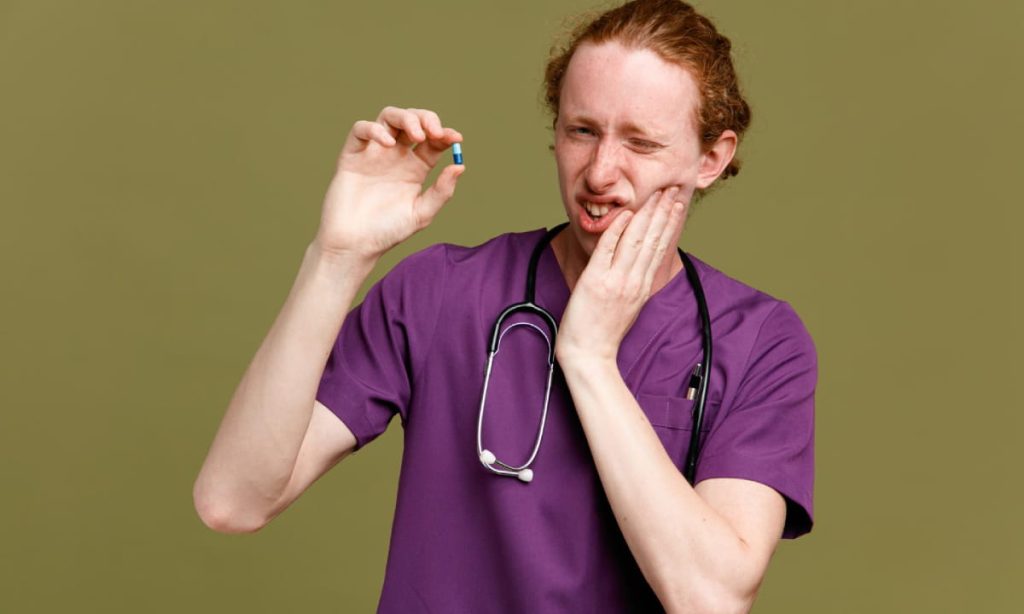
Your dentist might suggest you take antibiotics before your extraction. But do you actually need them? How many days? What happens if you skip them? Most healthy people do not need antibiotics before a tooth extraction. But for certain medical conditions or active infections, antibiotics before tooth extraction are essential. It can range from 1 single dose taken 30 to 60 minutes before the procedure, all the way up to 7 days of treatment before the dentist touches anything.
Let us tell you everything you need to know, and if you have questions about your specific situation, Dr. Shahyar Foroughi at Atrium Dental in Ahwatukee is one call away at (480) 940-4321.
Is It Necessary to Take Antibiotics Before Tooth Extraction?
It depends on your situation. For a healthy adult with no underlying conditions and no active infection, the answer is no; antibiotics before tooth extraction are generally not needed. Your immune system handles the procedure just fine.
But for specific groups of patients, the answer is a clear yes. Every extraction releases bacteria into the bloodstream. If you have a heart valve problem, a joint replacement, or a weakened immune system, that bacteria does not just disappear; it can travel to those vulnerable areas and cause a serious infection. That is when antibiotics are not optional, and depending on your condition, that means either a single dose taken 30 to 60 minutes before the procedure, or a full 3 to 7 day course started before your extraction day.
Here is a breakdown of the timing protocols:
| Situation | When to Start Antibiotics | Duration |
| Active tooth infection | 3–7 days before extraction | Until infection is reduced |
| Heart valve disease / infective endocarditis risk | 30–60 minutes before procedure | Single dose only |
| Joint replacement (within 2 years) | 30–60 minutes before procedure | Single dose only |
| Immunocompromised patients (diabetes, HIV, cancer treatment) | 1 day before procedure | Continue after as directed |
| Osteonecrosis of the jaw risk (bisphosphonate therapy) | 1–2 days before procedure | Continue until gum heals |
| No risk factors, no infection | Not needed | N/A |
Common medication and doses for antibiotics before tooth extraction in Ahwatukee:
| Situation | Medication | Typical Dose | When to Take |
| Infection prevention (prophylaxis) | Amoxicillin | 2g | 30–60 minutes before procedure |
| Penicillin allergy (prophylaxis) | Clindamycin | 600mg | 30–60 minutes before procedure |
| Active tooth infection | Amoxicillin | 500mg, three times daily | For 3–7 days, as prescribed |
Important Notes:
- If the tooth is swollen, painful, or infected, antibiotics are usually given for 3–7 days before extraction. This lowers bacteria levels and makes the procedure safer.
- Patients with heart valve disease, prosthetic valves, or a history of infective endocarditis take one dose of Amoxicillin 2g, 30–60 minutes before the procedure. It is a single timed dose, not a full course.
- Patients at risk of osteonecrosis of the jaw or those who are immunocompromised may start antibiotics 1 day before extraction and continue until the gum heals.
- If you forget your preventive dose, it can still be taken up to 2 hours after the procedure. After that, call your dentist for advice.
What Happens If You Don’t Take Antibiotics Before Tooth Extraction?
If your dentist did not prescribe antibiotics, skipping them is completely fine. For healthy patients, they are simply not needed. But if you were prescribed them and you skip them, here is what can go wrong:
Active Infection
The bacteria in the tissue can spread during the procedure. Without antibiotics reducing that load first, the infection can push deeper into your jaw, your neck, or your bloodstream.
Heart Condition
Bacteria released during the extraction can attach to damaged or artificial heart valves and cause infective endocarditis, a serious heart infection that is hard to treat and can be life-threatening.
Joint Replacement
The same bacteria can settle around a prosthetic joint and cause an infection that often requires surgery to fix.
Weakened Immune System
Your body cannot clear bacteria the way a healthy person can. What would be a minor issue for most people can turn into an abscess or a systemic infection for you.
If your Ahwatukee dentist prescribed antibiotics before your tooth extraction, take them. All of them. On time. Do not cut the course short, and do not substitute with leftovers from an old prescription; the dose and drug choice were picked for your specific situation.
Get Expert Tooth Extraction Care in Ahwatukee
Most healthy people do not need antibiotics before a tooth extraction. But if you have a heart condition, a joint replacement, a weakened immune system, or an active infection, you do. The only way to know for sure is to have a dentist review your full medical history before the procedure.
At Atrium Dental in Ahwatukee, Dr. Shahyar Foroughi, D.D.S., reviews every patient’s full medical history before any extraction. He identifies who needs pre-treatment antibiotics, what medication is appropriate, and how to time it correctly, so your procedure is as safe as possible, and your recovery goes smoothly.
That’s why Atrium Dental in Ahwatukee is trusted by local patients with a 4.8-star rating on Google. Call (480) 940-4321 or visit us at 4425 E. Agave Rd. #130 Phoenix, AZ 85044 to schedule your extraction consultation in Ahwatukee.
FAQs
How long after antibiotics can a tooth be extracted?
If you have an active infection, most dentists wait 3–7 days after starting antibiotics. This lowers infection risk. If antibiotics are for prevention only, the tooth is usually removed 30–60 minutes after the dose.
Can I take antibiotics before a tooth extraction?
Only if your dentist prescribes them, not everyone needs antibiotics. Taking them without need can cause side effects and antibiotic resistance.
Can I take amoxicillin before a tooth extraction?
Yes, if your dentist prescribes it. For prevention, the usual dose is 2g 30–60 minutes before the procedure. For infection, it’s often 500mg three times daily. If you’re allergic to penicillin, your dentist will choose another option. Never self-prescribe.