
Noticing a dark blue or purple spot on your lip can be unsettling, especially when it doesn’t go away. A venous lake is a harmless blood vessel spot, but it can affect how your lip looks and make some people feel self-conscious. Treatment can safely reduce or remove the spot and improve appearance. At Atrium Dental, we offer venous lake treatment in Ahwatukee to help patients feel more confident about their smile.
Table of Contents
ToggleVenous Lake Lip Pictures
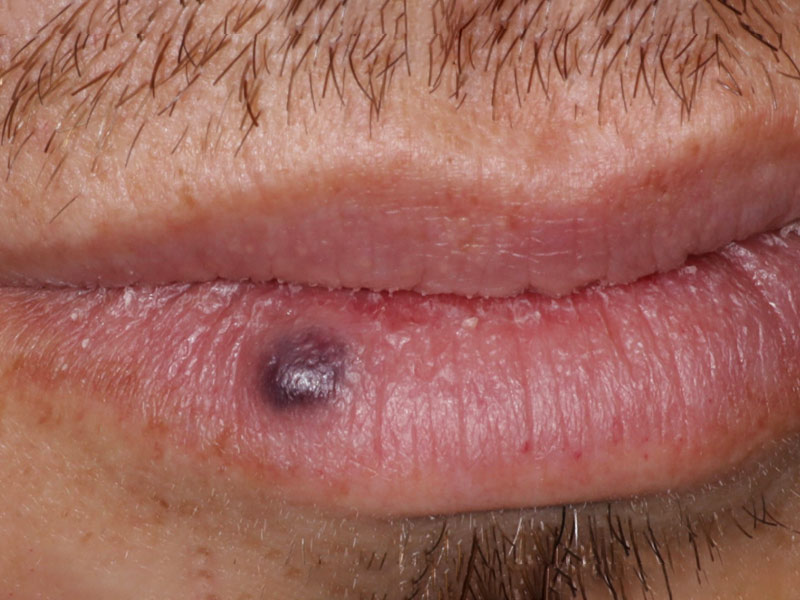
Venous Lake Lip Causes and Symptoms
Before you go through a venous lake treatment in Ahwatukee, you need to know the signs and causes:
| Causes | Symptoms |
| Sun exposure over time | Soft blue or purple spot on the lip |
| Weakened blood vessel walls | Lesion that darkens when pressed |
| Aging of the skin and vessels | Smooth, flat, or slightly raised area |
| Blood pooling in small veins | Usually painless |
| Damage to lip blood vessels | More noticeable over time |

Venous Lake Treatment Near Me in Ahwatukee
Meet Our Dentist
Dr. Shahyar Foroughi, D.D.S., has experience diagnosing and treating oral conditions like venous lakes with a careful, patient-first approach. He earned his undergraduate degree from USC and his dental degree from UCSF, with advanced training in oral surgery and laser-assisted dental treatments. His focus is on accurate diagnosis, gentle care, and clear communication.
During his venous lake treatment in Ahwatukee, Dr. Foroughi takes time to explain what this benign lesion is, confirm that it’s harmless, and discuss treatment options when removal is desired. Patients appreciate his calm manner and attention to detail.
Schedule your visit:
- Visit our clinic at E. Agave Rd., Phoenix
- Call (480) 940-4321
- Trusted by locals with a 4.8-star Google rating
Persistent blue or purple lip spots may require professional evaluation, and venous lake treatment in Ahwatukee can safely remove these lesions.
Posted onTrustindex verifies that the original source of the review is Google. If I can give more than 5 stars I would! Dr. Foroughi and staff are wonderful! Best customer serivice I've experienced in a dental office that's for sure. Thank you Dr. Foroughi and staff for always making me feel comfortable, and taking care of me.Posted onTrustindex verifies that the original source of the review is Google. I had teeth cleaning done here at Atrium Dental. Brianna, Maryke, & Dr. Shahyar Foroughi were amazing. Maryke was so thorough & gentle with my cleaning. Dr. Foroughi answered all of my questions. Very professional and polite staff. I will be coming again. Thank you 😊Posted onTrustindex verifies that the original source of the review is Google. Nice caring staff, clean office and the Doctor listened to all my concerns. He also genuinely cared about my oral health. I recommend this office highlyPosted onTrustindex verifies that the original source of the review is Google. Thanks Atrium! Excellent care as always!Posted onTrustindex verifies that the original source of the review is Google. I have been a patient for years and never have had a problem always a great experience and opportunity to improve my smile and the service is amazingPosted onTrustindex verifies that the original source of the review is Google. My wife and I always have a great experience with our hygienist, Janell R. She is very thorough and takes time with our cleanings and educates us as well! Thank you Janell R. For taking such good care of us. You’re one in a Million!Posted onTrustindex verifies that the original source of the review is Google. Very professional staff, very organized, very clean and welcoming environment. Atrium does a fantastic job!
Venous Lakes Treatment Before & After
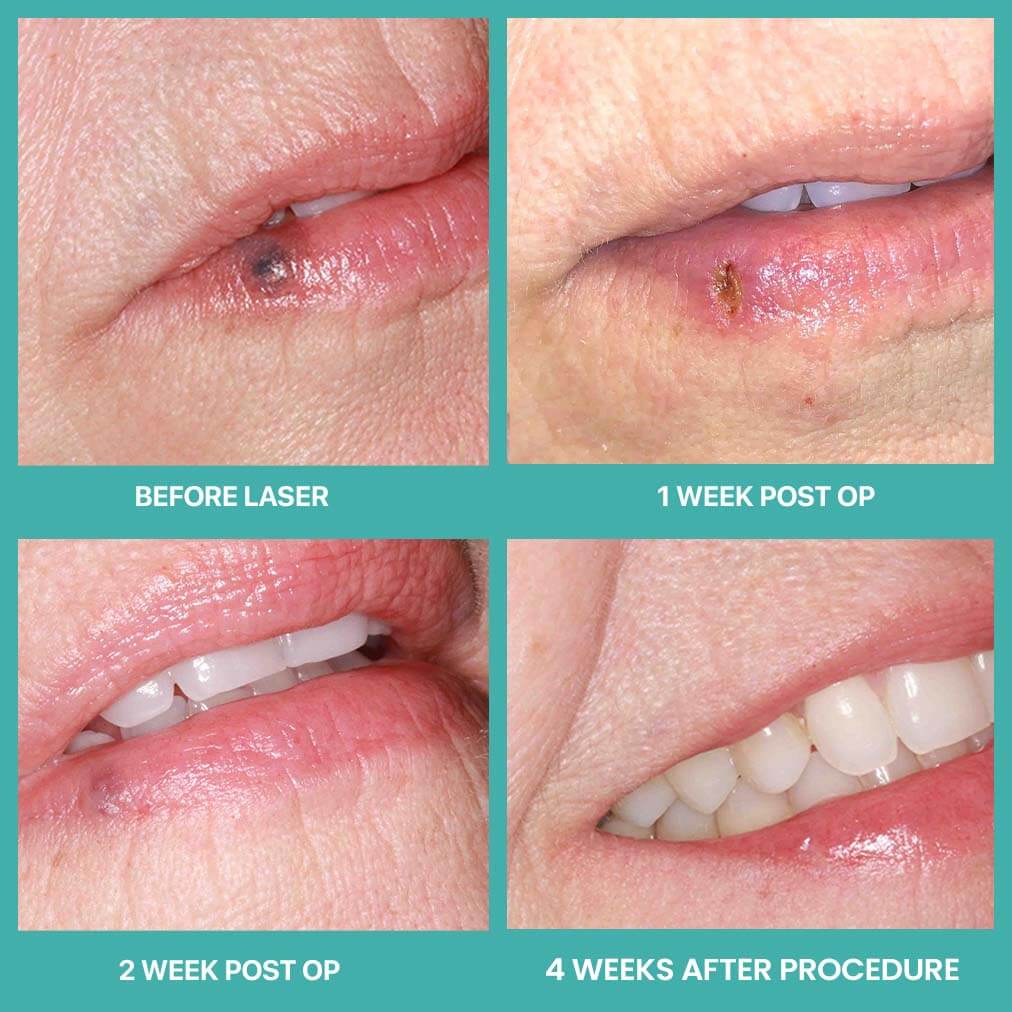
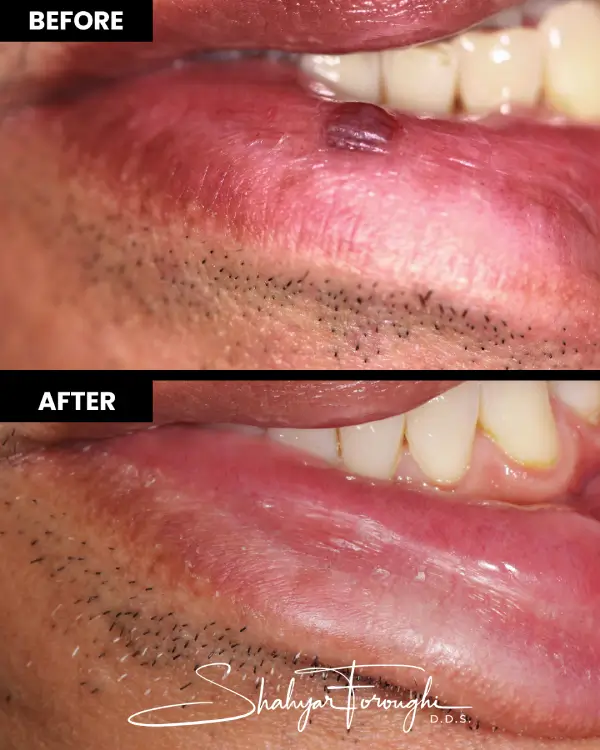
Steps of Our Venous Lake Treatment in Ahwatukee
Our venous lake treatment in Ahwatukee starts with a diagnosis. We review your health history and take a close look at the dark blue or purple spot on your lip. The color, softness, and appearance of the lesion often help confirm. If there’s any uncertainty, a biopsy may be recommended to rule out other conditions.
Common venous lake treatments in Ahwatukee include surgery, Cryotherapy (freezing with liquid nitrogen), and laser treatment. In the past, surgery was the main choice, but now we can use advanced dental lasers to safely remove or shrink the lesion. At Atrium Dental, we use a soft tissue laser to treat it:
- Dr. Foroughi starts by talking about your concerns and examining the spot.
- Using a soft tissue laser, he carefully treats the area. Laser dentistry can shrink or remove the spot without cutting.
- The treatment takes about 8 minutes. Most patients feel no pain, but we can use a light anesthetic if needed.
- After our venous lake treatment in Ahwatukee, we may schedule one more appointment if the spot is large or needs further care.
Recovery is usually simple. Most patients heal fully within 2 to 4 weeks. Mild swelling or tenderness may occur for a short time, but it typically fades quickly. Patients can return to normal activities the same day while following basic aftercare instructions to support healing.
Cost and Insurance Coverage
The cost of venous lake lip treatment in Ahwatukee depends on the size of the lesion and the treatment method used, such as laser therapy. After reviewing current dental and medical insurance guidelines, most insurance plans do not cover the treatment of this benign lesion, because it is usually considered cosmetic. Coverage is typically 0%. In rare cases, such as frequent bleeding, pain, or medical concern, medical insurance may provide partial coverage, but this is uncommon and plan-specific.
FAQs
What does a venous lake look like?
It looks like a soft, dark blue or purple spot on the lip. It’s usually smooth and compressible.
Are venous lake lip home treatments effective?
No. Home treatments are not effective and can irritate the area. Professional evaluation and treatment are the safest options.
Are venous lakes permanent?
They can be permanent, but treatment can remove or reduce them.
Is a venous lake cancerous?
No, it’s not cancerous. It’s a benign condition.
Does a venous lake go away?
It may not go away on its own, but treatment can remove it for good.
Is the venous lake covered by insurance?
Unfortunately, dental insurance does not cover the treatment since it is considered cosmetic.
Related Blogs

Cost of Venous Lake Treatment in Phoenix
A venous lake is a small dark blue or purple spot that often appears on the lips, ears, or face. Many people in Phoenix choose to
Venous Lake Lip vs Melanoma: The Differences
If you see a dark spot on your lip, it’s normal to feel worried. Two things that can look alike are venous lake and melanoma. One