
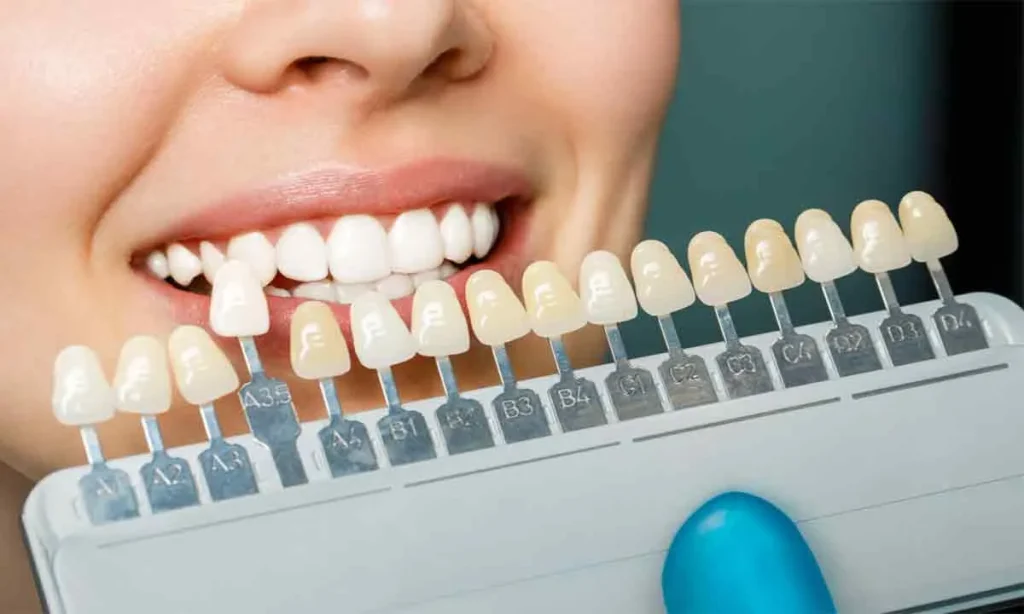
Getting veneers costs real money, so many patients often weigh the cost before they book anything. They want to know “How long do porcelain veneers last?” and if the money is worth it.
Most porcelain veneers last 10 to 15 years, often longer with good care. A long study that followed porcelain veneers for up to 21 years found 96% were still intact at 10 years and 91 to 96% still intact at 20 years, when the veneer was bonded to healthy enamel. Other studies found a wider range, from 64% to 96% at 10 years, mostly tied to how much enamel was left for the veneer to bond to.
In this article, we will cover the porcelain veneers lifespan, what shortens their life, signs it’s time to replace them, and how to make yours last longer.
Average Longevity of Porcelain Veneers
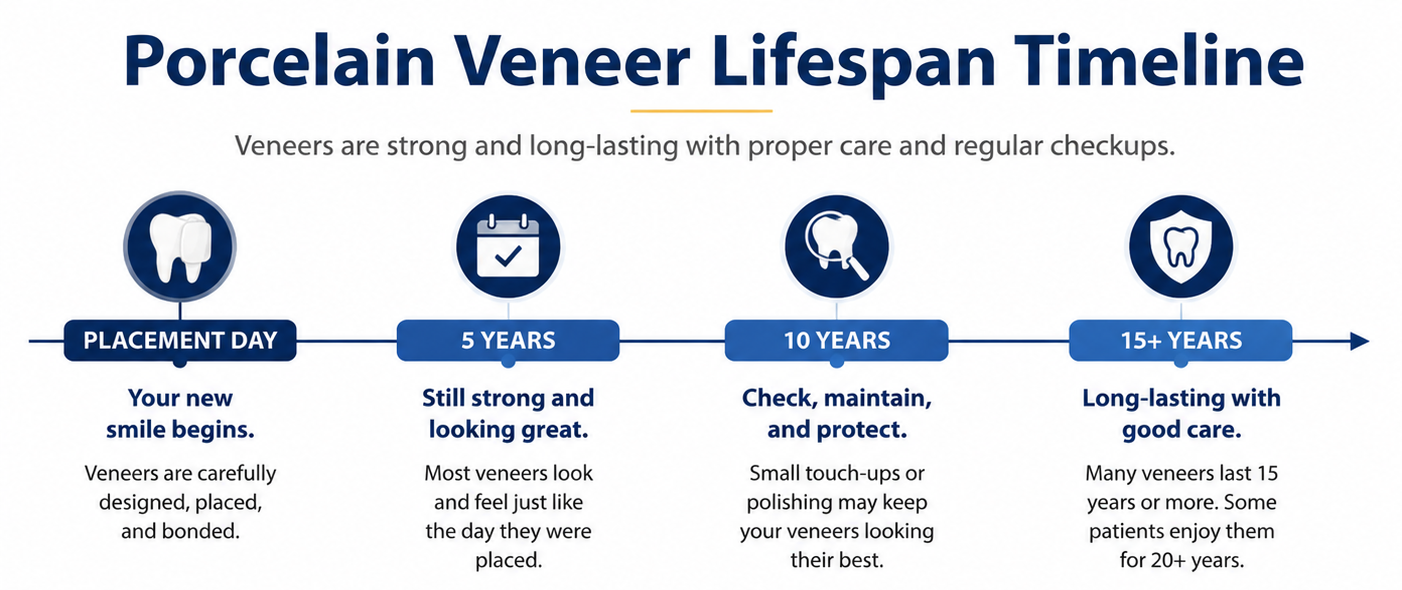
But not all types of porcelain are the same. Here is how the main types compare:
| Porcelain type | Typical lifespan |
| Feldspathic porcelain | 10 to 15 years. The classic, most natural looking option, and the one the 21 year study followed. |
| Leucite reinforced glass ceramic | 10 to 15 years. Looks great but chips are a little easier than lithium disilicate. |
| Lithium disilicate (E.max) | Often 15 to 20 years in real world use. Stronger and more chip resistant than feldspathic. |
| Zirconia | Can match or beat that range short term, but it is newer, so long term data past 10 to 15 years is still limited. |
One more thing worth knowing! E.max and zirconia are harder than natural tooth enamel. If a veneer in either material is not fitted carefully, it can wear down the tooth it bites against faster over time.
Factors Affecting the Longevity of Porcelain Veneers
A few everyday things make the biggest difference:
- Brushing, flossing, and regular checkups keep plaque from building up at the edges of the veneer, where problems usually start first.
- Grinding your teeth at night puts repeated force on the porcelain and the bond, which can lead to chips or a veneer coming loose years earlier than expected.
- A bite that is out of alignment puts uneven pressure on certain teeth, which wears down a veneer faster than one that only handles normal, even force.
- Biting your nails, chewing ice, or opening things with your teeth puts sudden, sharp force on the edge of a veneer, which is a common way they chip.
- Coffee, tea, red wine, and smoking can stain the edges over time, even though the porcelain itself resists stains well.
- Gum health matters too. Gum disease or gum recession can expose the edge of a veneer, which can shorten how long it looks and functions well.
- The skill of the dentist who placed it, and the quality of the porcelain used, affect how well the veneer was fitted and bonded in the first place, which shapes everything else on this.
How Long Do Porcelain Veneers Last on Front Teeth?
Veneers almost always go on front teeth, since that is the part of your smile people actually see, and front teeth take less biting force than your back teeth. Back teeth do more of the grinding and chewing work, which is why they usually get crowns instead of veneers.
Front-teeth porcelain veneer longevity is typically 10 to 15 years and beyond. Since they are the most visible teeth in your mouth, small changes like dulling or a tiny chip tend to get noticed sooner, even if the veneer is still working fine.
Do Porcelain Veneers Last Forever?
No, porcelain veneers do not last forever. Some videos online claim dentists hide this, but it is not a secret. Porcelain wears down a little over time, the bond ages, and gums shift as you get older. Any honest dentist tells you this up front. It does not mean veneers are a bad choice, it just means they are not a one time, forever fix.
How Often Do Veneers Need to Be Replaced?
There is no set schedule. Replacement depends on wear, not a date on the calendar. Most people go 10 to 15 years before they need to think about it, and plenty go longer.
Replacement usually comes from a chip too big to smooth out, a veneer coming loose, decay underneath, or teeth around it changing shade. Porcelain does not patch like composite, so a failing veneer almost always needs full replacement, not a repair.
Signs It’s Time to Replace Your Veneers
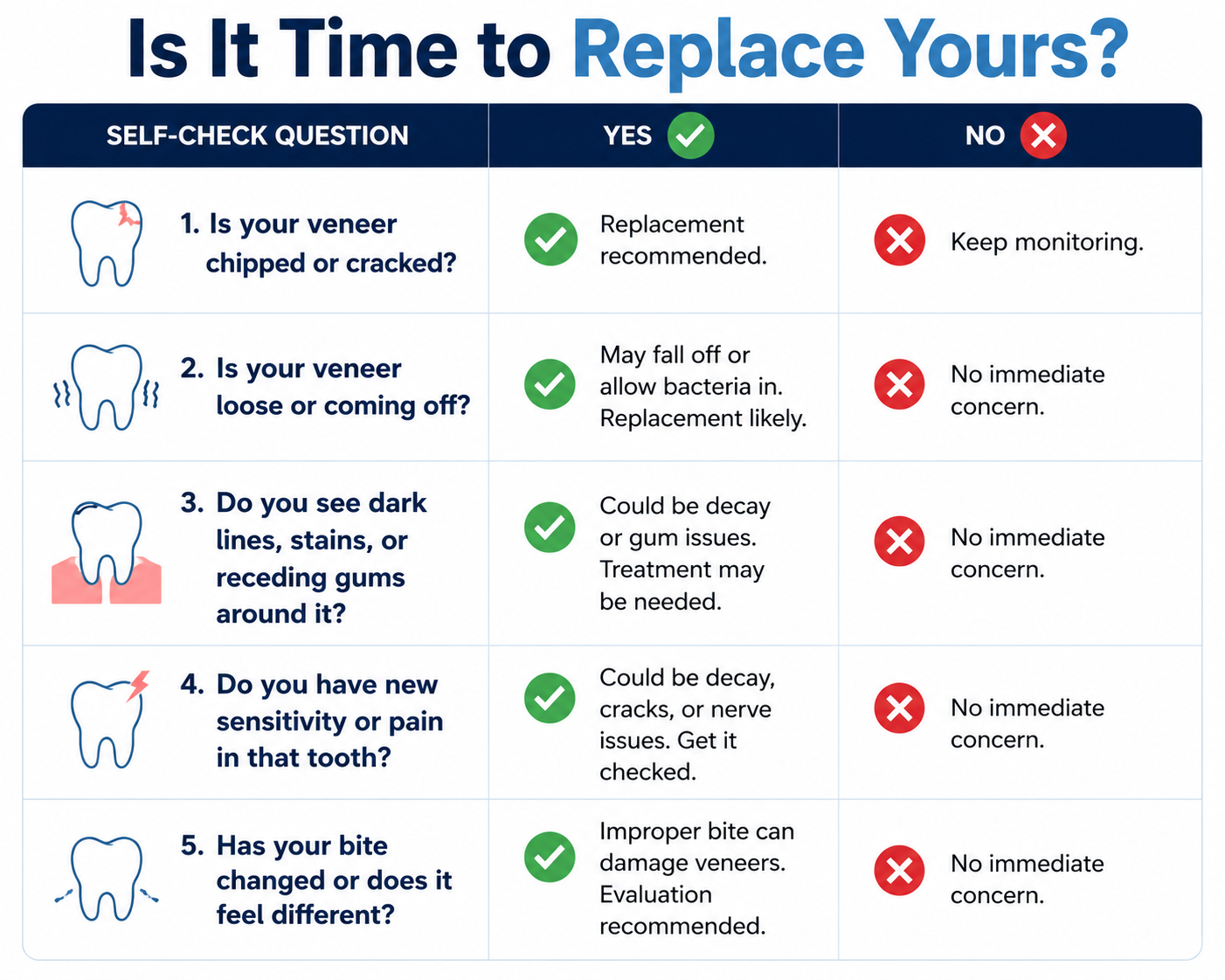
Here are the signs you need a veneer replacement:
- A chip or rough edge you can feel with your tongue.
- Dulling or a color mismatch with your other teeth.
- Your gum line pulling back and showing the edge of the veneer.
- A dark line or small gap between the veneer and your gum.
- Looseness or a change in how your bite feels.
- New sensitivity around a veneered tooth.
- Pain or discomfort when you bite down.
- A persistent bad taste or odor near the tooth, which can mean something is leaking underneath.
- A veneer that has visibly cracked or come off.
Best Practices for Maximizing Porcelain Veneer Longevity
Taking care of your porcelain veneers goes a long way. Here are simple tips to prolong lifespan of porcelain veneers:
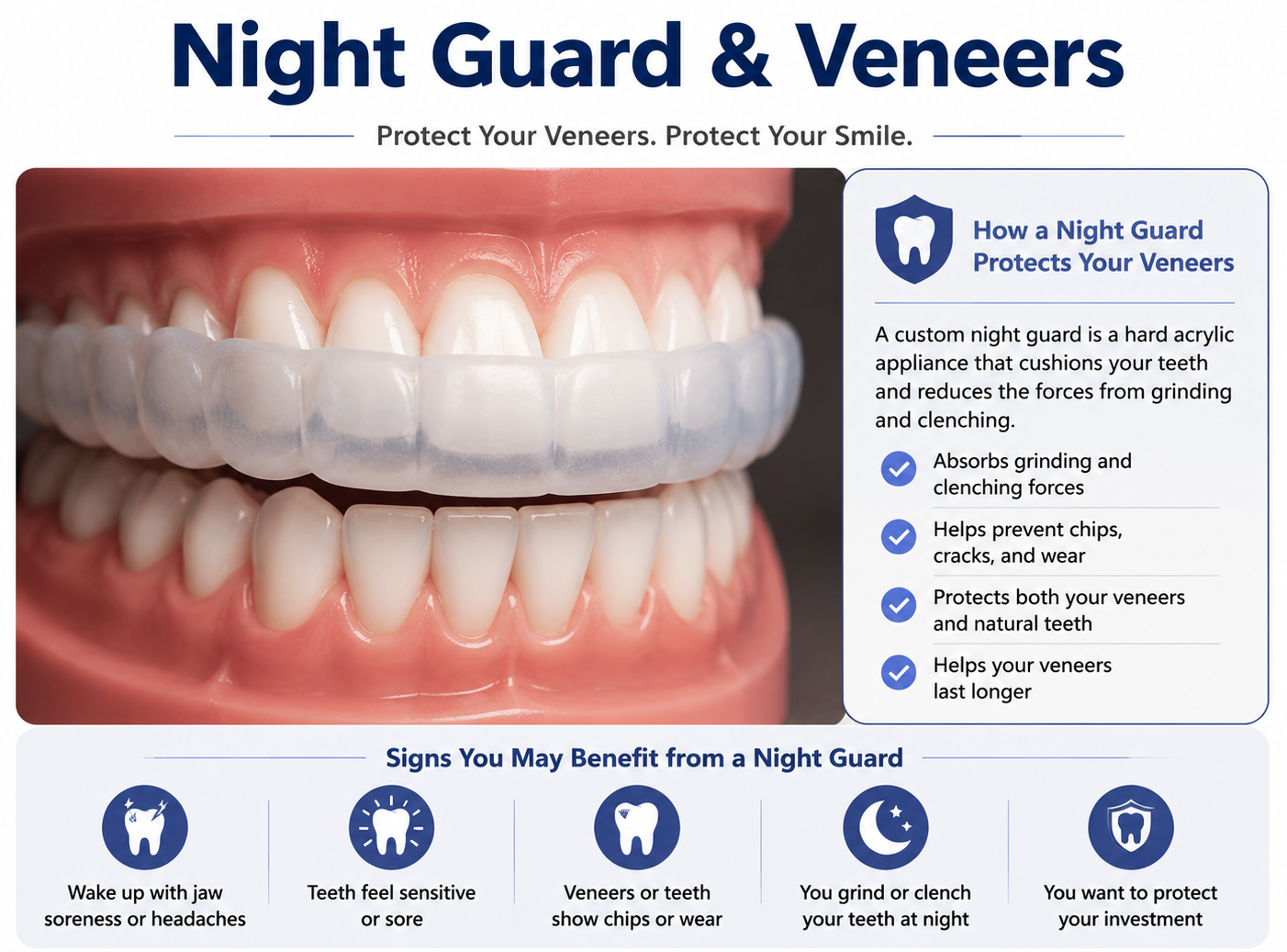
- Wear a nightguard if you grind your teeth at night.
- Do not use your teeth to open packages, bite your nails, or chew on ice.
- Use a soft toothbrush and a non abrasive toothpaste.
- Floss daily, gently, around the edges of your veneers.
- Keep up with regular checkups and cleanings so small problems get caught early.
- Cut hard foods into smaller pieces instead of biting down directly.
- Cut back on coffee, tea, red wine, and smoking to protect the edges from staining.
- Tell your dentist right away if you notice a chip, looseness, or new sensitivity.
Does Enamel Preservation Matter for Veneer Lifespan?
Veneers usually bond best to your natural tooth enamel. When more healthy enamel remains, the veneer may have a stronger and more reliable bond. If a larger amount of enamel has been removed, or the veneer needs to bond over an old filling, it may be more likely to need repair or other dental work later.
| What the Veneer Bonds To | Still in Place | No Extra Treatment Needed |
| Mostly natural enamel | About 99% | About 99% |
| Small amount of dentin exposed | About 95% | About 95% |
| Larger amount of dentin exposed | About 91% | About 74% |
| An existing filling | About 94% | About 70% |
The Key Points:
- Enamel gives veneers the strongest and most reliable bond.
- Too much exposed dentin may make a veneer more likely to need repair later.
- Old composite fillings under a veneer may make the edges less secure.
- Keeping more of the natural tooth can help veneers last longer.
How Much Can Teeth Grinding Shorten Veneer Life?
Grinding your teeth at night is one of the most common reasons veneers chip or come loose early. Grinding puts repeated force on the porcelain and the bond that neither one is built to handle for hours every night.
How much it shortens your veneers depends on how hard and how often you grind, so there is no single number that fits everyone. A nightguard is the standard way to protect your veneers from this, and it is worth asking about at your consult, not after a veneer chip.
Get Porcelain Veneers for Long-Term Results
Good results with porcelain veneers start with the right treatment plan. At Atrium Dental, Dr. Shahyar Foroughi checks your teeth, enamel, gums, and bite before recommending veneers. He also discusses the shape, size, and shade you want for your smile.
With more than 25 years of experience and a D.D.S. from UCSF, Dr. Foroughi can help you understand your options and what may work best for your teeth. If you want to preserve more of your natural tooth structure, you can also ask about prepless veneers.
Atrium Dental helps adults get veneers in Ahwatukee and Phoenix that are built to last, with a plan matched to their teeth, their bite, and their budget.
If you want to know if veneers are a good fit for you, visit us at 4425 E. Agave Rd. #130, Phoenix, AZ 85044, or call (480) 940-4321 to set up a consultation.
FAQs
How long do porcelain veneers last on average?
Typically 10 to 15 years. A 21-year study found 96% still intact at 10 years and 91 to 96% at 20 years when bonded to healthy enamel. Other studies show a wider range, tied mostly to how much enamel was left for bonding.
Do veneers last longer than crowns?
Often about the same. Crowns cover the whole tooth and handle more bite force, so they may edge out veneers on back teeth. Veneers usually go on front teeth, where the forces are lower to begin with.
Can porcelain veneers last 30 years?
It is possible with excellent care and quality placement, but it is not the typical case.
What makes veneers fail early?
Teeth grinding, poor hygiene, hard foods, and lower quality placement are the most common causes.
Do composite veneers last as long as porcelain?
No. Composite typically lasts 5 to 7 years, versus 10 to 15 or more for porcelain.
Is replacing veneers painful or expensive?
Replacement is similar to the original process and is not typically painful. Cost varies by case, a consult gives you a real number.
How durable are veneers?
Durable enough for everyday biting and chewing, but not indestructible. They can chip under hard force, like ice or fingernails, or wear down faster if you grind your teeth without a nightguard.
Can veneers really last over ten years?
Yes. A 21-year study found 96% of porcelain veneers were still intact at 10 years, and most people can expect 10 to 15 years or more with good care.