
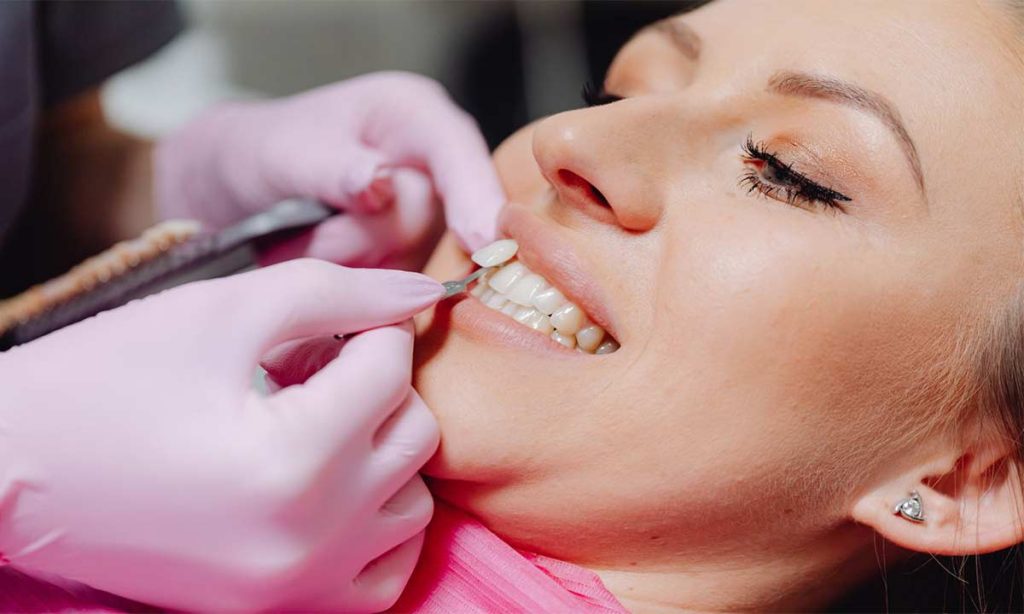
Many people want veneers but feel nervous about one big question: Do porcelain veneers damage your teeth? Honestly, porcelain veneers should not damage healthy teeth when a licensed dentist plans and places them correctly. But traditional porcelain veneers usually need a thin layer of enamel removed, and that change is permanent.
However, this does not mean veneers ruin your teeth. It means you need the right exam, the right plan, and the right dentist before you decide. This article is for education only. It does not replace a dental exam or diagnosis.
Table of Contents
ToggleDo Veneers Ruin Your Natural Teeth?
Veneers do not damage natural teeth by themselves. They can be a safe cosmetic option when your teeth and gums are healthy, and the treatment is planned correctly. Problems usually happen when veneers are placed on unhealthy teeth, too much enamel is removed, the fit or bite is incorrect, grinding is ignored, or proper oral care is not maintained.
The risk goes up when:
- A dentist removes too much enamel.
- Cavities or gum disease are not treated first.
- The veneer does not fit well.
- The bite is not checked.
- Heavy grinding or clenching is ignored.
- The patient does not brush, floss, or visit the dentist regularly.
So, the real answer is not “veneers are bad for your teeth.” The real answer depends on your teeth, your bite, your gum health, and the skill of the dentist.
What Does Veneer Preparation Actually Involve?
Veneer preparation means your dentist shapes the front surface of the tooth so the veneer can fit well. A porcelain veneer is a thin shell that covers the front of the tooth. To avoid a bulky look, the dentist often removes a very thin layer of enamel.
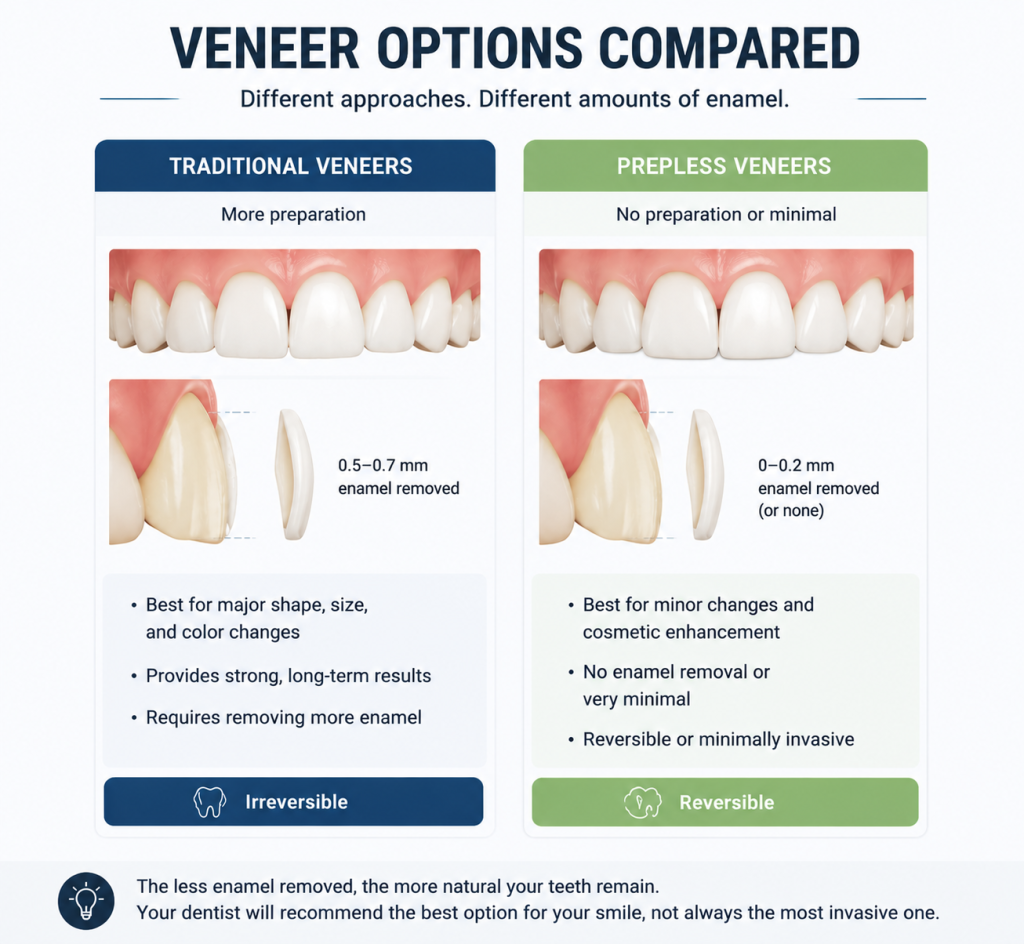
Traditional porcelain veneers often need about 0.3 mm to 0.7 mm of enamel removal for veneers. A credit card is about 0.8 mm thick, so the amount can be very small when the dentist uses a conservative plan.
The process may include:
- A dental exam
- Gum health check
- Bite check
- Smile design
- Shade selection
- Digital scans or impressions
- Light enamel reshaping when needed
- Temporary veneers in some cases
- Final bonding of the porcelain veneers
The goal is to keep as many healthy teeth as possible while creating a natural fit and a clean smile.
Why Enamel Removal Does Not Automatically Mean Tooth Damage
Enamel removal for veneers is permanent, but that does not always mean tooth damage. There is a difference between careful enamel reshaping and harmful over-preparation.
Careful veneer prep removes only the amount needed for fit, shape, and strength. It keeps the tooth as strong as possible and helps the veneer bond well.
Harmful preparation happens when too much tooth structure is removed or when veneers are placed on teeth that already have problems. This can lead to sensitivity, weak teeth, poor bonding, or future dental issues.
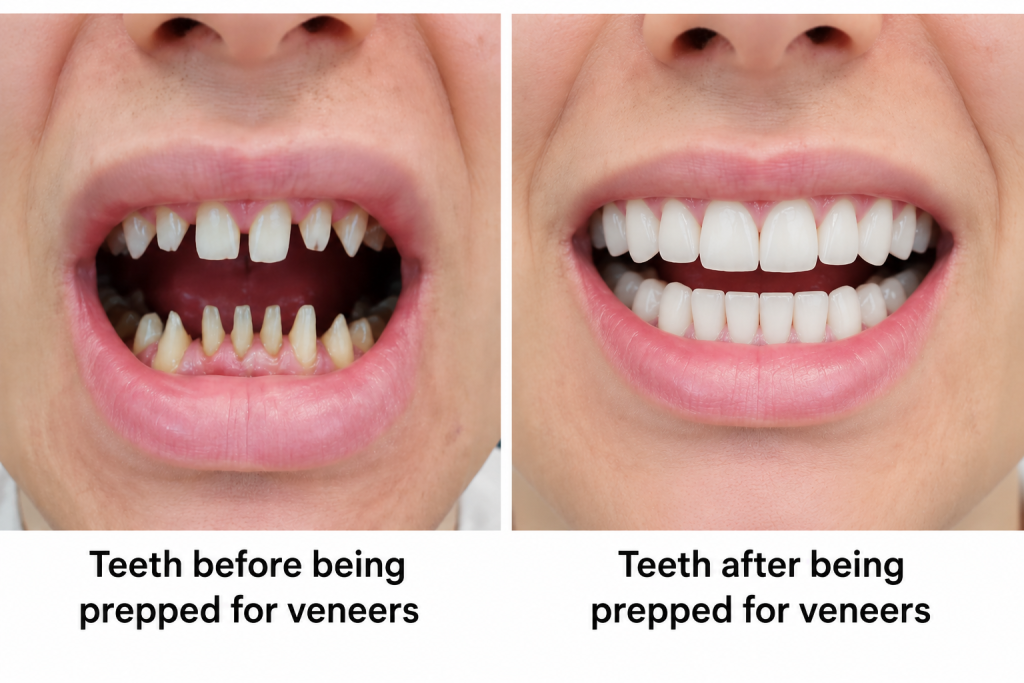
What Do Teeth Under Veneers Look Like?
Teeth under veneers usually still look natural. They may look slightly smaller, thinner, or more shaped after preparation. They should not look like the extreme “shark teeth” often shown online. That appearance usually comes from crown preparation, which requires reducing the entire tooth. Veneers typically cover only the front surface and require less tooth reduction.
How Do Porcelain Veneers Affect Your Natural Teeth?
Veneers affect natural teeth in a few important ways. The biggest change is enamel removal. Once enamel is removed, it does not grow back.
Do porcelain veneers cause sensitivity? Well, some patients may feel short-term hot or cold sensitivity after veneer preparation or bonding. This can improve after the teeth adjust. If pain is strong, sharp, or gets worse, the dentist should check the bite, bonding, and tooth health.
Can teeth rot under veneers? Veneers do not decay, but the natural tooth can still get cavities around or under the veneer. This can happen when plaque builds up, the veneer edge does not fit well, or the patient does not brush and floss well.
Veneers can also chip, crack, loosen, or wear down. Hard biting, nail biting, teeth grinding, sports injuries, or using teeth as tools can damage them.
Are Veneers Safe for My Teeth? Use This Quick Check
| Your Situation | What It May Mean |
| Healthy teeth with small chips, stains, or gaps | Veneers may be safe if planned conservatively |
| Active cavities or gum disease | Treat these first |
| Heavy grinding or clenching | Ask about a custom night guard before veneers |
| Mild crowding or bite issues | Ask if Invisalign should come first |
| You want no enamel removal | Ask about prepless veneers or bonding |
| Large fillings or weak teeth | Crowns may be safer than veneers |
| Very thin enamel | Veneers may not bond as well |
| Strong fear about permanent changes | Compare porcelain, prepless, and composite options first |
Note: This quick check does not replace a dental exam. It helps you understand what your dentist may look at before recommending veneers.
Safer Alternatives If You Do Not Want Tooth Prep
If you do not want tooth prep, veneers may not be the only option. A cosmetic dentist can help you compare safer or more conservative choices.
| Option | What It Can Help With | Main Limit |
| Prepless veneers | Small gaps, small teeth, mild shape changes | Not right for every smile |
| Composite bonding | Chips, small gaps, minor shape issues | Stains and chips more easily than porcelain |
| Teeth whitening | Yellow or stained teeth | Does not change tooth shape or close gaps |
| Invisalign | Mild crowding, spacing, or bite issues | Takes time and does not change tooth color |
| Dental crowns | Weak, cracked, or heavily filled teeth | Needs more tooth reduction than veneers |
| Enamel contouring | Small rough edges or tiny shape changes | Only works for minor changes |
The best option depends on what you want to change. Color, shape, spacing, bite, and tooth strength all matter.
Safety Note: Veneers Are a Dental Treatment, Not a Beauty Shortcut
Veneers are dental treatments. They should only be planned and placed by a licensed dentist.
This matters because enamel removal is permanent. Poor veneer work can lead to pain, decay, gum problems, bite problems, nerve injury, infection, or the need for more treatment later.
Be careful with anyone who offers “veneers” without a full dental exam, X-rays when needed, gum checks, bite checks, and clear treatment planning. A safe smile makeover starts with healthy teeth and gums.
Who Should Wait Before Getting Veneers?
You may need to wait if you have:
- Cavities that need treatment
- Gum disease or unhealthy gums
- Severe teeth grinding or clenching.
- Weak teeth or very thin enamel
- Large fillings that affect tooth strength
- Bite problems that may affect veneers
- Unrealistic expectations about the results
Some treatments may need to come first:
- Gum treatment if your gums bleed, swell, or pull away from your teeth.
- A custom night guard if you grind your teeth
- Invisalign if mild crowding or spacing affects your smile
- Crowns if teeth are weak or heavily filled
Will Porcelain Veneers Make Teeth Sensitive?
Porcelain veneers can cause temporary sensitivity after enamel preparation or bonding. Teeth may feel more sensitive to hot, cold, or air while they adjust. Strong pain, bite pain, or worsening sensitivity should be checked by a dentist.
Can Veneers Be Removed?
Veneers can be removed by a dentist, but teeth that have been prepared usually cannot return to their original condition. After enamel removal, teeth may look different or feel more sensitive without veneers. Since veneers may need replacement in the future, patients should understand the long-term commitment before treatment.
When to See a Cosmetic Dentist
You should see a cosmetic dentist if you:
- Want to learn if veneers are right for your teeth.
- Worry about enamel removal or permanent changes.
- Have questions about porcelain, prepless, or composite veneers.
- Notice tooth sensitivity or discomfort before considering cosmetic treatment.
- Have chipped, stained, worn, uneven, or slightly spaced teeth.
- Want to improve your smile but are unsure which treatment fits your needs.
- Have gum problems, cavities, or bite issues that may affect veneer results.
- Want to compare veneers with options like whitening, bonding, Invisalign, or crowns.
A cosmetic dentist can check your teeth, gums, and bite to help you choose a safe treatment plan based on your oral health and smile goals.
How Atrium Dental Plans Veneers to Protect Your Natural Teeth
At Atrium Dental (4.8-star Google rating), we use a conservative approach to porcelain veneer treatment in Ahwatukee. Our goal is to improve your smile while preserving as much healthy tooth structure as possible.
Before recommending veneers, we check your teeth, enamel, gums, bite, tooth shade, smile design, and cosmetic goals. This helps us decide whether porcelain veneers, prepless veneers, composite veneers, whitening, Invisalign, night guards, or another option is right for you.
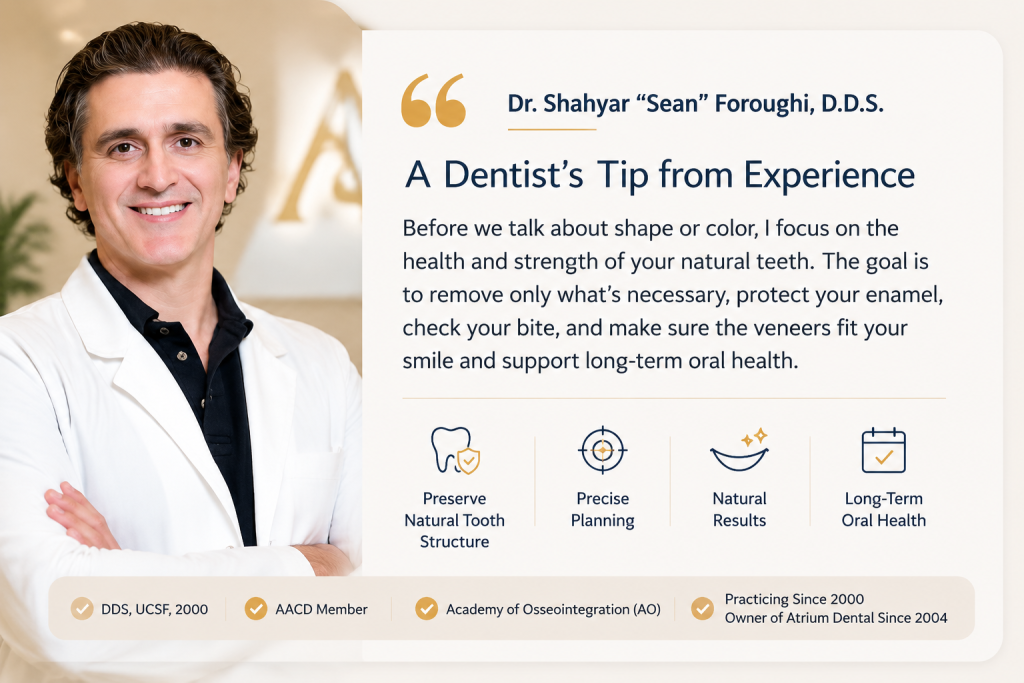
Dr. Shahyar “Sean” Foroughi, D.D.S., creates veneer plans based on each patient’s facial features, bite, and lifestyle. He earned his DDS from UCSF in 2000, is a member of the AACD and the Academy of Osseointegration (AO), has practiced since 2000, and has owned Atrium Dental since 2004.
We help patients in Ahwatukee, Phoenix, Tempe, Chandler, and nearby South Mountain compare porcelain veneers, prepless veneers, composite veneers, whitening, and clear aligners before choosing cosmetic treatment.
Ready to explore your veneer options? Contact Atrium Dental for a consultation:
- Visit 4425 E. Agave Rd. #130, Phoenix, AZ 85044.
- Call (480) 940-4321.
FAQs
Do porcelain veneers damage your teeth?
No, porcelain veneers should not damage healthy teeth when placed correctly by a licensed dentist. Traditional porcelain veneers usually need permanent enamel removal, so careful planning matters.
Do veneers damage your real teeth underneath?
Veneers do not damage the tooth by themselves. However, the natural tooth around or under a veneer can still decay if hygiene, fit, or bonding fails.
Is enamel removed for veneers?
Yes, traditional porcelain veneers usually need a thin layer of enamel removed. Prepless veneers may need little or no enamel removal, but they only work for selected cases.
What are the risks of porcelain veneers?
The main risks include sensitivity, chipping, decay around the edges, gum irritation, poor fit, and future replacement. The risk is higher when veneers are placed on unhealthy teeth or planned without a proper bite check.
Do veneers weaken teeth?
Conservative veneers should not weaken healthy teeth. Over-preparation, poor bonding, or poor planning can create problems.
How much enamel is removed for porcelain veneers?
Traditional porcelain veneers often need about 0.3 mm to 0.7 mm of enamel reduction. The exact amount depends on your teeth, smile goals, bite, and veneer design.