
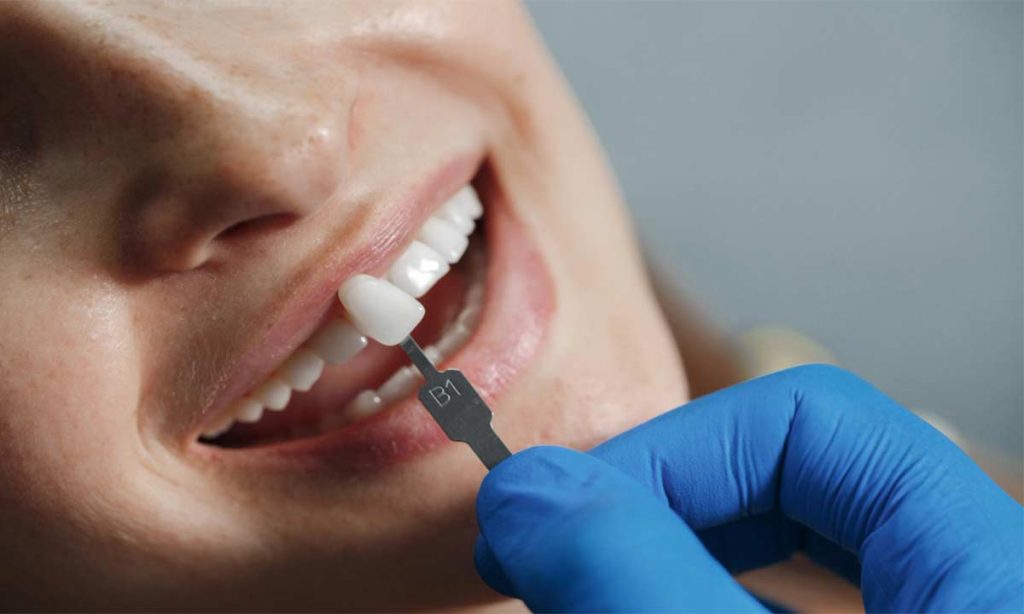
No-prep veneers promise a straighter, brighter smile without any shaving or drilling of your natural teeth. That sounds appealing, but one question remains: Am I a candidate for no-prep veneers?
Most people with healthy teeth and gums, a stable bite, and small cosmetic concerns such as gaps, chips, or mild stains are good candidates for no-prep veneers. People with active tooth decay, gum disease, significant crowding, or a habit of grinding their teeth usually are not good candidates, at least not until that issue gets treated first.
This guide walks you through a simple self-check so you can get a clear, honest answer before you book anything.
Table of Contents
ToggleA Quick Self-Check
What’s true for you | What it usually means |
You have small gaps between your front teeth | Usually a good fit |
You have minor chips or slightly rough edges | Usually a good fit |
You have mild stains that whitening did not fully clear | Usually a good fit |
Your teeth look small or narrow | Usually a good fit |
Your enamel and gums are healthy | Usually a good fit |
You already keep up good oral hygiene habits | Usually a good fit |
You have active tooth decay or gum disease | Talk to your dentist first |
Your teeth are severely crowded, rotated, or overlapping | Talk to your dentist first |
You have a significant bite problem, such as an overbite, underbite, or edge to edge bite | Talk to your dentist first |
You grind or clench your teeth often | Talk to your dentist first |
Your teeth are already large, have large fillings, or are very dark | Talk to your dentist first |
Who Is a Good Candidate for No-Prep Veneers
These non-invasive veneers change the shape, size, or color of your teeth. You can get veneers without shaving your teeth down first, but that only works well on certain smiles.
Here is what usually makes someone a good fit:
- Healthy enamel, because the veneer needs enough of your natural tooth surface to bond to firmly.
- A stable, even bite, because pressure from an uneven bite can put extra stress on the thin material over time.
- Small or narrow-looking teeth, because a thin layer of porcelain or composite can add width and fullness without looking bulky.
- Small gaps between teeth, since no prep veneers can often close minor spacing without any shaving.
- Minor chips or rough edges, which a thin veneer can usually smooth out and cover.
- Mild discoloration that whitening alone has not fully fixed.
- Good oral hygiene habits, since these veneers still need regular brushing, flossing, and checkups to last.
- Realistic expectations about the results and the timeline, including knowing that no-prep veneers typically last about 5 to 7 years before they may need replacement.
Who Is NOT a Good Candidate for No Prep Veneers
No-prep veneers are not the right fit for every smile, and that is a normal, common outcome. Here are the situations where a different option typically works better:
- Active tooth decay or gum disease. These usually need treatment first, since veneers work best on teeth that are already healthy underneath.
- Teeth that are severely crowded or rotated. In these cases, removing a small amount of enamel usually gives a more natural-looking result.
- A significant bite problem, such as an overbite, underbite, or edge-to-edge bite. These can put extra stress on a thin shell of porcelain or composite.
- Frequent teeth grinding or clenching. No-prep veneers are thinner than traditional veneers, so they are generally more prone to chipping under that kind of pressure.
- Large fillings or teeth that are already weak or cracked, since these usually need a stronger material underneath for support.
- Teeth that are already large or full. Adding more material on top can make the smile look overdone instead of natural.
- Very dark staining. A thin veneer may not fully hide a dark natural tooth color underneath, so a traditional veneer often covers it better.
Some people come across comments online about no-prep veneers looking bulky or fake. That worry usually traces back to cases where the fit was not right for that person’s teeth to begin with. That is exactly why the check above matters. On the right smile, a well-planned no-prep veneer should blend in with your natural teeth, not stand out from them.
It is also normal to notice mild, short-term tooth sensitivity after the bonding process. This does not mean something went wrong. If sensitivity does not fade within a week or two, let your dentist know.
Does Insurance Coverage Affect Your Candidacy?
Most dental insurance treats veneers as a cosmetic choice, so it typically does not cover them. You could be an excellent no-prep veneer candidate and still need to plan for the cost out of pocket, and insurance limits do not decide whether your teeth are actually a good fit. Ask your dental office directly about your plan and any payment options they offer.
What Happens During a No-Prep Veneers Consultation
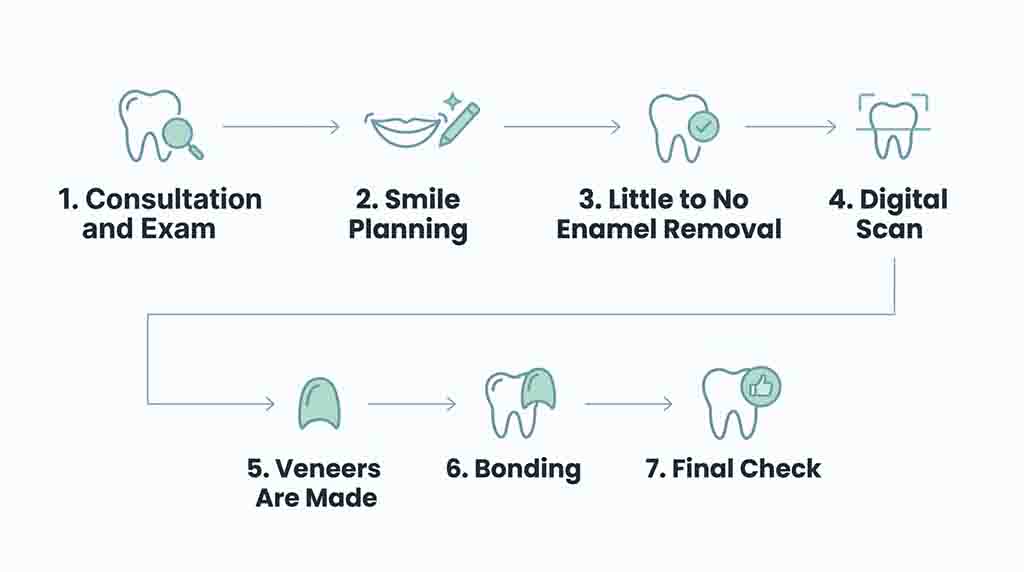
A consultation is where the self-check above gets confirmed by an actual exam. To see if you are a candidate for no-prep veneers, your dentist:
- Checks the strength and condition of your enamel, since the veneer needs a good surface to bond to.
- Looks at how your teeth bite together, to catch any pressure that could stress a thin veneer over time.
- Checks the health of your gums, since veneers work best when the gums underneath are already in good shape.
- Talks with you about what you want your smile to look like, so the plan matches your goals as well as the condition of your teeth.
Caring for your veneers after treatment matters just as much as the exam beforehand.
- Avoid biting down on very hard foods, like ice or hard candy, since that kind of pressure can chip a thin veneer.
- Keep up with your regular dental checkups so your dentist can catch any small issues before they become bigger ones.
- Brush and floss as usual, but be extra careful flossing around the base of each veneer, where it meets your gum.
Good aftercare is one of the biggest factors in how long your veneers actually hold up.
Your Options If No-Prep Veneers are Not Right for You
Option | Might be a better fit if |
|---|---|
Your teeth have more noticeable issues. Removing a small amount of enamel first often gives a more natural, better fitting result. | |
You want a more affordable option a dentist can often shape directly onto your teeth in one visit. | |
Teeth whitening | Color is your main concern and your teeth are otherwise healthy and well aligned. |
Invisalign | Crowding or a bite problem is the main issue standing in the way of veneers. |
Gum contouring | Uneven gum tissue is affecting the shape of your smile. |
You can also compare porcelain and composite veneers to see which might suit you better.
The Bottom Line
So, am I a candidate for no-prep veneers? Generally, they work best on healthy teeth with only minor cosmetic concerns. If that sounds like you, the option is worth exploring. If your self-check pointed to gum disease, decay, a significant bite issue, or heavy grinding, a different option is likely a better and longer-lasting fit, and that is a normal outcome, not a setback.
At Atrium Dental, we help patients figure out which option actually fits their smile, not just the one they first asked about. Call our office at (480) 940-4321 to book a consultation and get a straight answer about no-prep or minimal prep veneers for your own teeth.
FAQs
How do I know if I’m a candidate for no-prep veneers?
Run through the self-check above, then confirm it with a dental exam. Healthy enamel, a stable bite, and mild cosmetic concerns usually mean yes.
Are no-prep veneers bad for your teeth?
No-prep veneers are not harmful for teeth that are a good fit. Problems usually come from placing them on teeth that were not a good match to start.
What disqualifies someone from getting no-prep veneers?
Active decay, gum disease, severe crowding, a significant bite problem, and frequent grinding are the most common reasons a dentist suggests a different option instead.
Are no-prep veneers the same as Lumineers?
Not exactly. Lumineers is one specific branded product within the no-prep veneer category. Other no-prep or prepless veneers work on a similar idea, but they are not the same product.
Can I get no-prep veneers if my teeth are crowded or crooked?
Usually not if the crowding is significant. Removing some enamel first, or straightening your teeth, typically gives a better, longer-lasting result than a no-prep veneer alone.
Do no-prep veneers work on stained or discolored teeth?
They work well on mild staining that whitening did not fully clear. Very dark staining often shows through the thin material, so a traditional veneer may match better.
Is a no-prep veneers consultation different from a regular veneers consultation?
Not really. Your dentist checks the same basics: your enamel, bite, and gum health, then talks with you about which veneer, if any, fits your goals.
What’s the difference between no-prep and traditional veneers?
No-prep veneers use little to no enamel removal, while traditional veneers need some enamel shaved off first. Traditional veneers often suit more noticeable issues; no-prep veneers suit mild ones.
Can no-prep veneers be removed?
Some no-prep veneers can be removed, since little enamel was removed to place them. Any enamel adjustment or bonding is usually permanent (Cleveland Clinic). Ask your dentist about your case.